Christchurch Crib Menu Page
Developed in the period between the first and second world wars, the Christchurch Crib is deceptively simple yet incredibly useful.
It is nothing more than a skeletal steel construction used as a kind of Lego building block to form bridge supports, abutments and other (usually temporary) structural devices.
Although the 3ft Bridging Crib had been used in WWI the evolved Christchurch Crib was not introduced until the mid-thirties.
The Crib, properly known as the Bridging Crib 20 ton, was widely used in WWII in place of trestles and piers.
The key to the utility of the crib was their uniform dimensions and the resulting ability to be quickly clamped together and used vertically or horizontally, to produce complex 3D shapes, such as that seen in the photo at the bottom of this page.
The 20 ton crib was further developed in the 1950's to become the Bridging Crib 50 Ton,
but the design was visually identical (from a distance) though there were some important differences under the skin,
such as being made from hot dipped galvanised steel instead of just being painted.
They were also used extensively to build water tank supports,
although Cuplock Scaffolding is the officially correct support structure (for now).
Christchurch Cribs are still in service today, arguably one of the oldest pieces of military equipment still in serious service in their (more or less) original form.
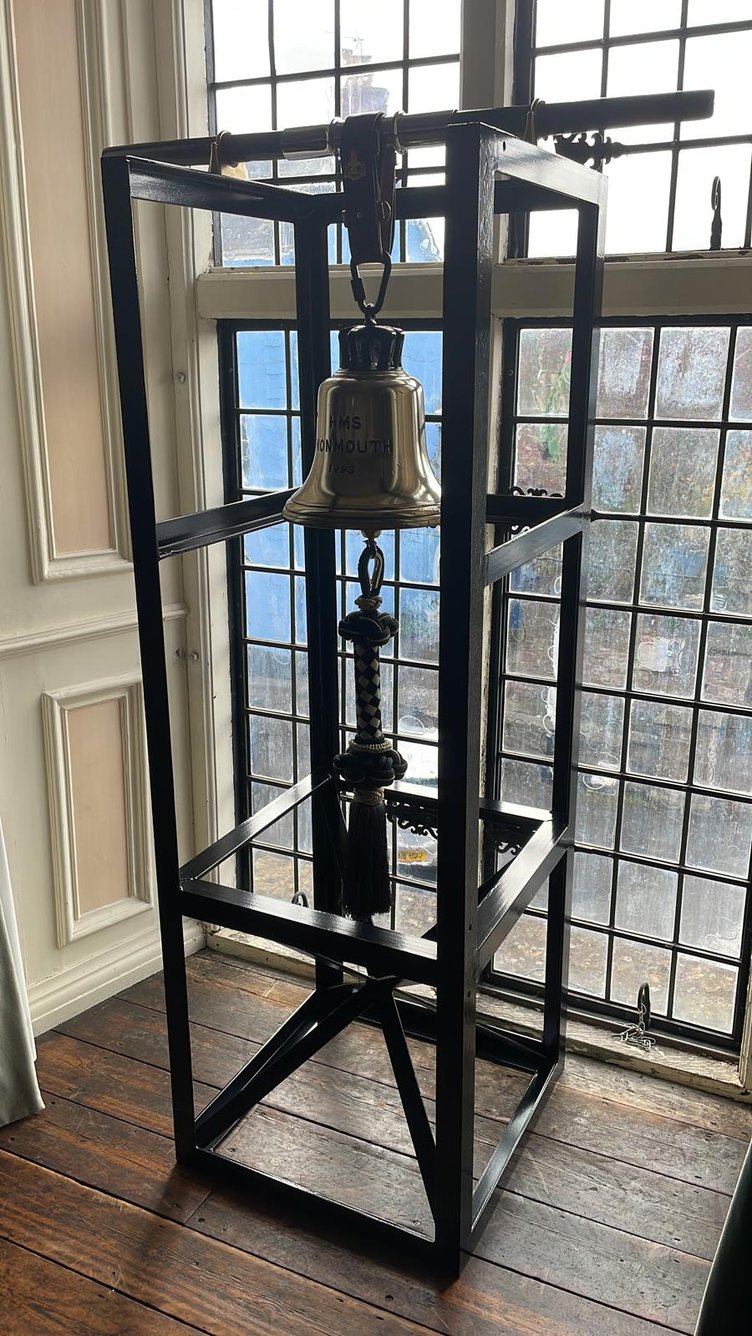
The Christchurch Crib seen in the photo above-right has been turned into a
(still massively over-strength) support for a ceremonial bell, by removing two cross-pieces.
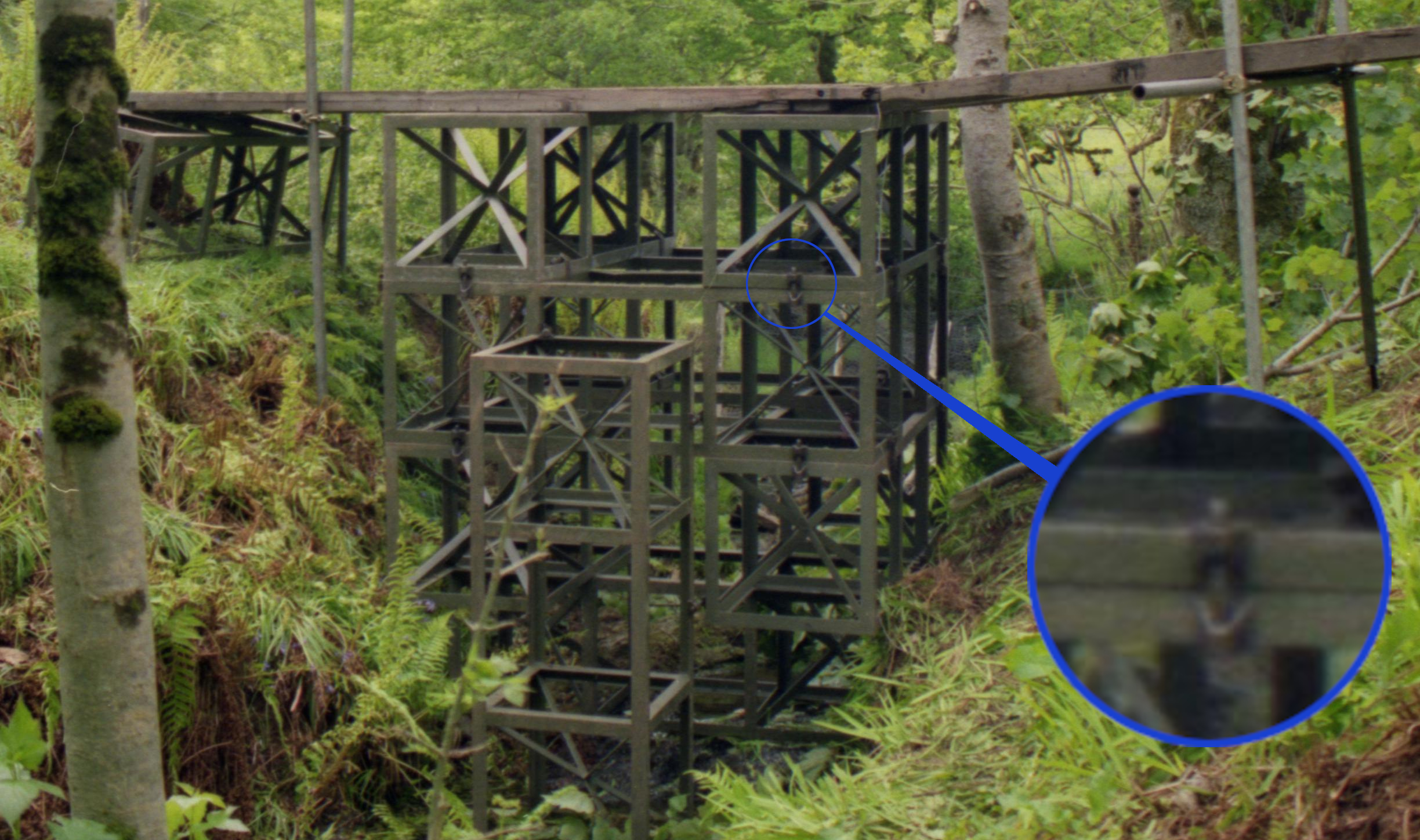
The photo at the bottom of this page shows a bundle of cribs, used by 104 Field Squadron RE(V) on Skye in 1991 to temporarily bridge a gap in preparation for building a permanent 'improvised' bridge.
The inset shows how individual cribs can be clamped together in whatever configuration is required.
Unlike standard bridging kits, there is no restriction at all on where the clamps are used.
| Description | OpenSCAD model |
STL Files | Images / Renders |
|---|---|---|---|
Christchurch Crib .STL files - Full Model |
Full Model |
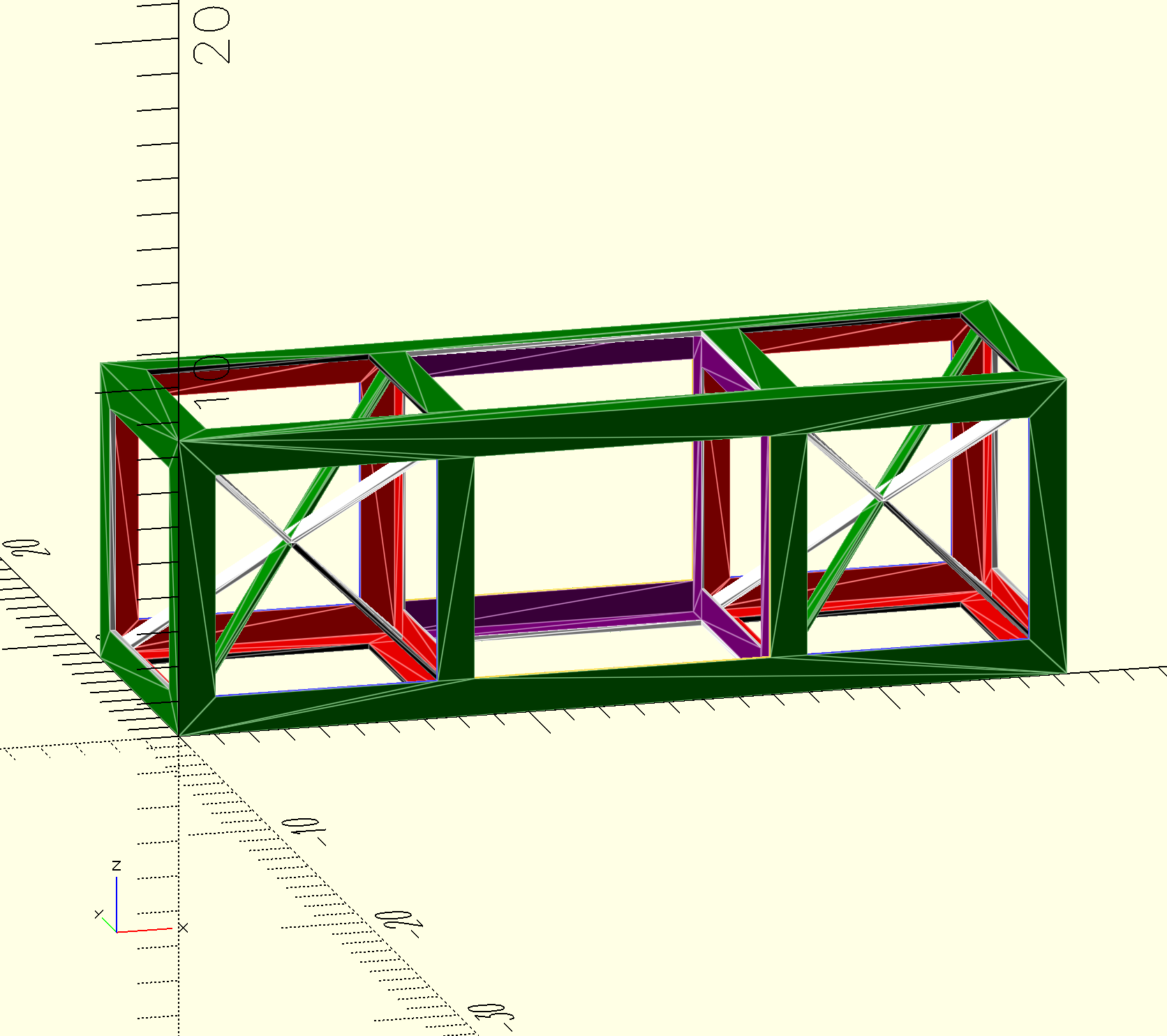
Full Model |
|
Christchurch Crib .STL files - Halved ModelPrint two, then invert one to form the top half. |
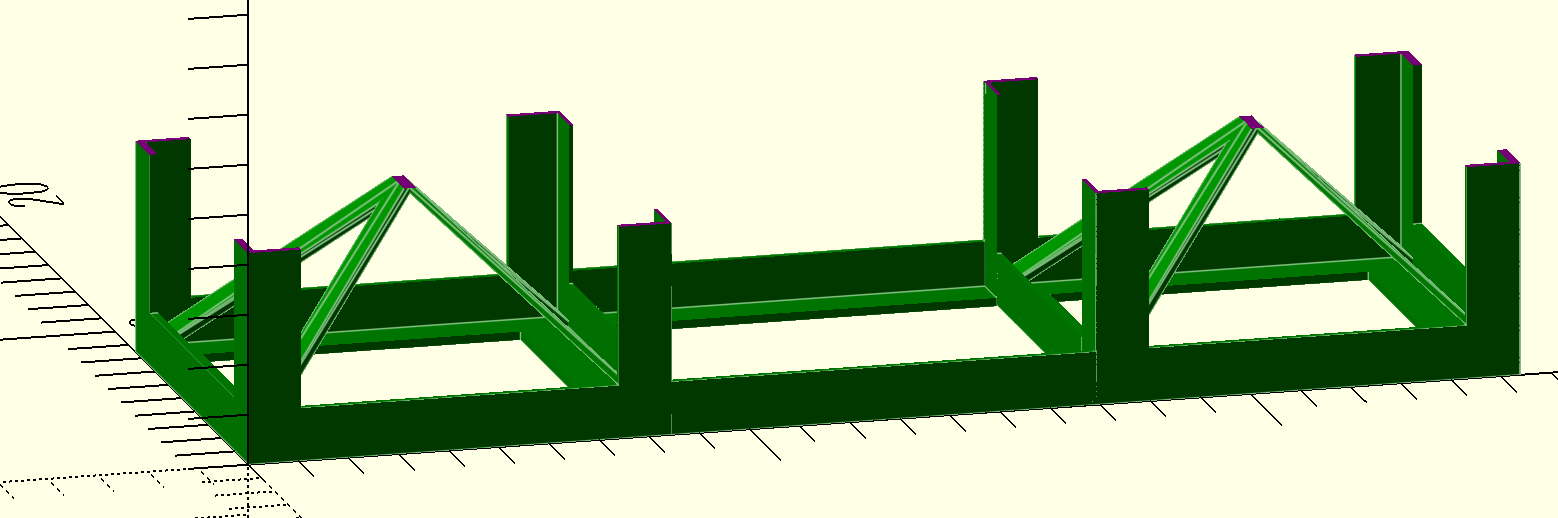
Lower half only - avoiding long overhang |
||
Christchurch Crib .STL files - Halved Model - No bracingUse the bracing below, or cut from plasticard. |
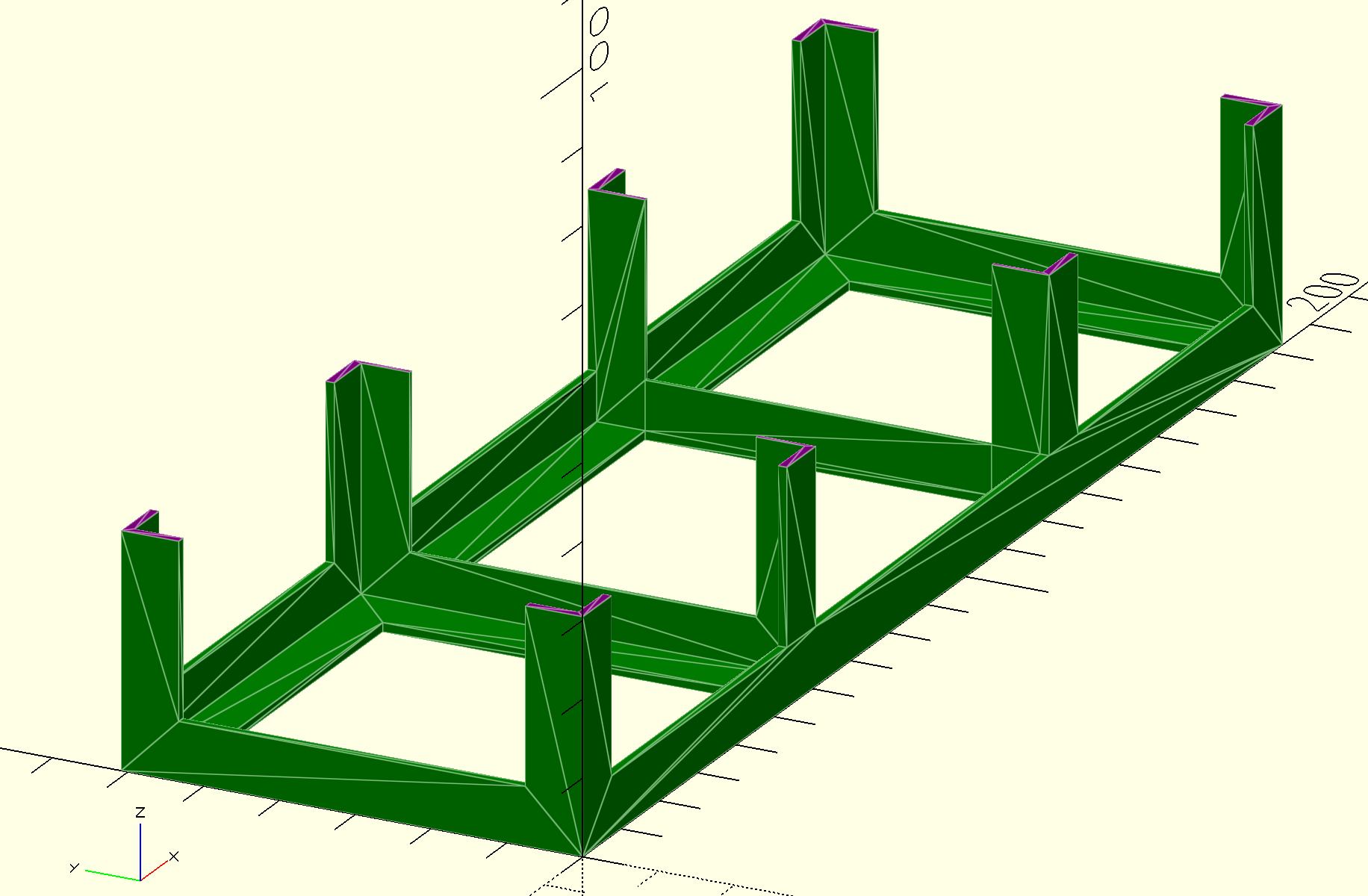
Lower half only, no bracing - avoiding any overhang |
||
Christchurch Crib .STL files - Quartered ModelAt smaller scales, you may have trouble printing the diagonal bracing, so print four of these instead, and add the bracing 'manually'. |
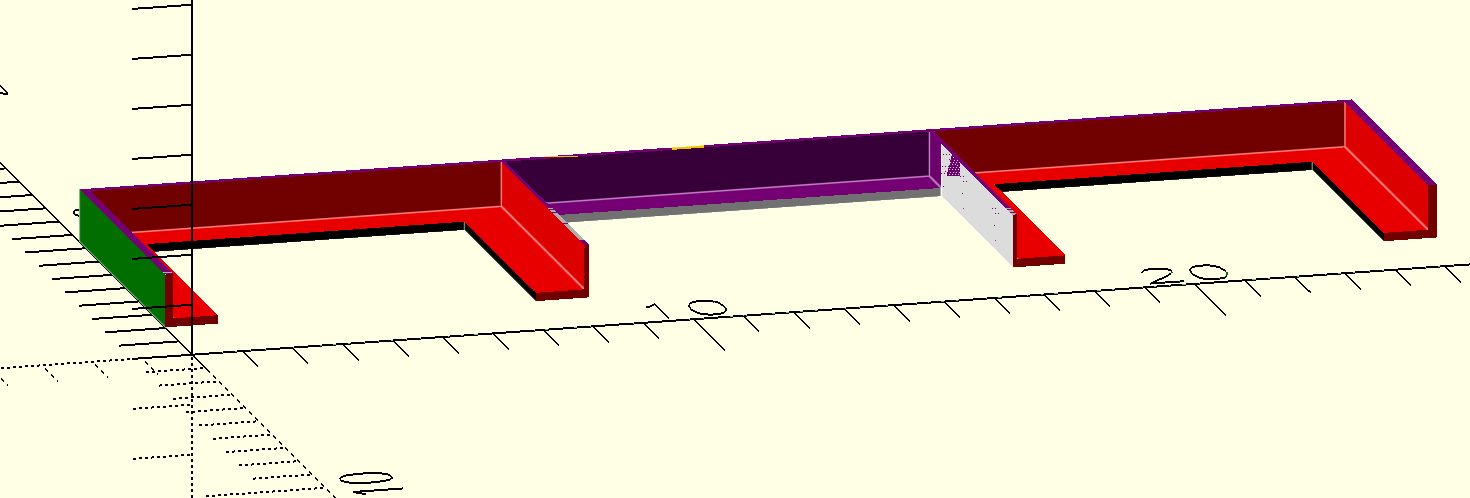
One face only - add the bracing by hand. |
||
Christchurch Crib .STL files - Cross BracingTwo bracers, crossed - easy to print flat.Turn 45° if your slicer doesn't drop it for you. |

|
||
Christchurch Crib .STL files - Cross BracingA single cross brace - four are needed at each end, ie eight in total. |

. |